An HVAC company owner searches “furnace repair” from his own driveway and sees three competitors listed before his business. His first reaction is frustration. His second is curiosity: what are those companies doing that he is not?
That curiosity is worth following. A simple local competitor review can show you what customers see when they compare options, and where your own online presence leaves questions unanswered.
Know What Local Search Is Weighing
Google explains that local results are based mainly on relevance, distance, and prominence in its guide to improving local ranking. Relevance is how well a profile matches the search. Distance is how close the business is to the searcher. Prominence reflects how well known a business is, based on information from across the web, including links, articles, directories, and reviews.
You cannot move your shop closer to every customer. You can, however, make your business more clearly relevant and better represented online. Those are the areas where comparing yourself with competitors is most useful.
Run a One-Hour Competitor Review
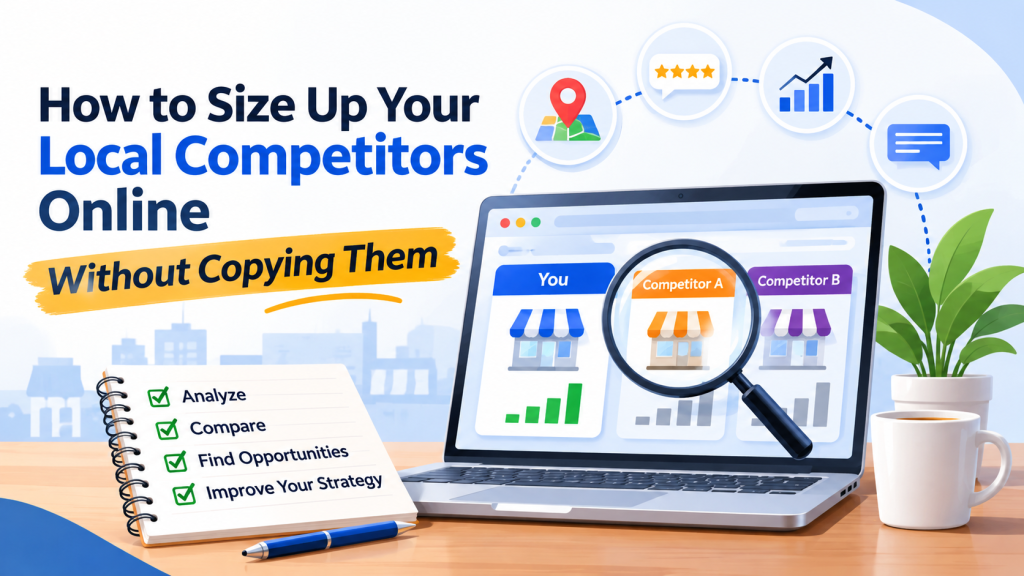
Pick three or four businesses that regularly appear for your most important services. Then look at each one the way a customer would:
- How complete are their business profiles, including hours, services, and photos?
- How many reviews do they have, how recent are they, and does the owner respond?
- Do their websites have a separate page for each main service?
- Which directories and local websites mention them?
- What do they say about service areas, emergency calls, or financing?
Record what you find in a simple table. Patterns usually appear quickly. You may notice that every competitor lists weekend hours while your profile does not, or that none of them explain their warranty clearly.
Turn Findings Into Your Own Plan
The goal is not to copy anyone’s wording, offers, or photos. It is to find gaps you can close honestly and strengths you can make more visible.
If competitors appear in directories you have overlooked, review those sites and decide whether they fit your business. HVAC companies, for example, can see how others present themselves in an air conditioning and heating directory category and make sure their own listing is just as complete. Express Business Listings shows each company’s contact details and website side by side, which makes this kind of comparison quick.
Then prioritize. Fix inaccurate information first, add missing services and photos next, and build a steady habit of asking for reviews.
Keep the Review on Your Calendar
Local markets change as new businesses open and others close. Repeat your competitor review every quarter, focusing on what customers can actually see. Results always depend on many factors, so treat each review as a guide for improving your presence rather than a promise of rankings. A complete, accurate profile on Express Business Listings can be one of the easy items to check off your list.
Frequently Asked Questions
How do I know who my real local competitors are?
Search for your main services the way customers do, such as “water heater installation” plus your city, from a few different locations in your service area. The businesses that repeatedly appear are your practical competitors online, even if they are not the companies you think of as your biggest rivals offline.
Is it okay to borrow ideas from competitor websites?
Learning from what competitors cover is normal, but copying their text, photos, or designs is not. Use their pages to spot topics customers care about, then explain your own services, process, and policies in your own words. Original content also gives customers a clearer reason to choose you.
Why does a competitor farther away show up before me?
Distance is only one factor. A business may appear because its profile closely matches the search, it has more complete information, or it is better known through reviews and mentions across the web. Improving the relevance and completeness of your own information is usually the best place to start.
Do I need paid tools to analyze local competitors?
No. A browser, a spreadsheet, and an hour of focused time can reveal a lot. Paid SEO tools can add useful data on keywords and links, but many small business owners get the most value from simply viewing competitor profiles, reviews, and websites the way a customer would.

Express Business Listings Team
The Express Business Listings team helps local firms get found online with accurate, easy-to-use directory listings.